
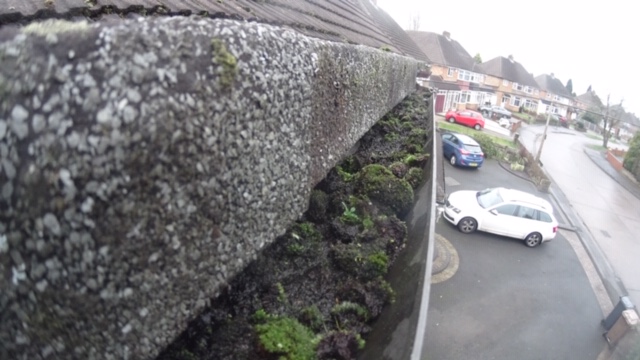
Moss needs damp, shady conditions
Moss is a non-vascular plant, meaning it lacks a root system to absorb water from the ground. It instead takes in moisture and nutrients directly through its leaves and stems. This is why it flourishes in consistently damp or humid environments. Roofs and gutters provide the perfect habitat, often being shaded and retaining moisture after rainfall or from morning dew. Moss can also tolerate a wide range of temperatures.
What happens after a long, hot, dry spell
During an extended period without rain, moss will dry out completely. It goes into a state of dormancy, becoming brown and brittle. While it may look dead, it is not. This desiccation tolerance is a key survival mechanism, allowing it to withstand long periods of drought.
A rapid and heavy descent of moss
When heavy rain follows a long, dry spell, gutters are particularly vulnerable. The dry, brittle moss that has accumulated on roofs over weeks or months rapidly absorbs a large amount of water. This causes it to swell and become much heavier.
The combination of the moss’s increased weight and the force of the heavy rain causes it to lose its grip on the roof tiles. It then slides down the roof and piles up at the entrance of the downpipes, creating a dense, waterlogged blockage. This is often more severe than a gradual build-up of debris because a large volume of moss is mobilised all at once.
This blockage prevents water from flowing away from the roof. Instead, the water backs up, overflows the gutters, and cascades down the sides of the house. This can lead to significant issues such as damp walls, saturated foundations, and water damage to the exterior of the property.
Moss can swell to a large size
Moss is known for its remarkable ability to absorb water, acting like a sponge. Some species, such as Sphagnum moss, can absorb up to 20 times their dry weight in water. The plant’s structure, with specialised cells, allows it to hold onto this moisture for an extended period, which is why it’s so good at blocking gutters.