
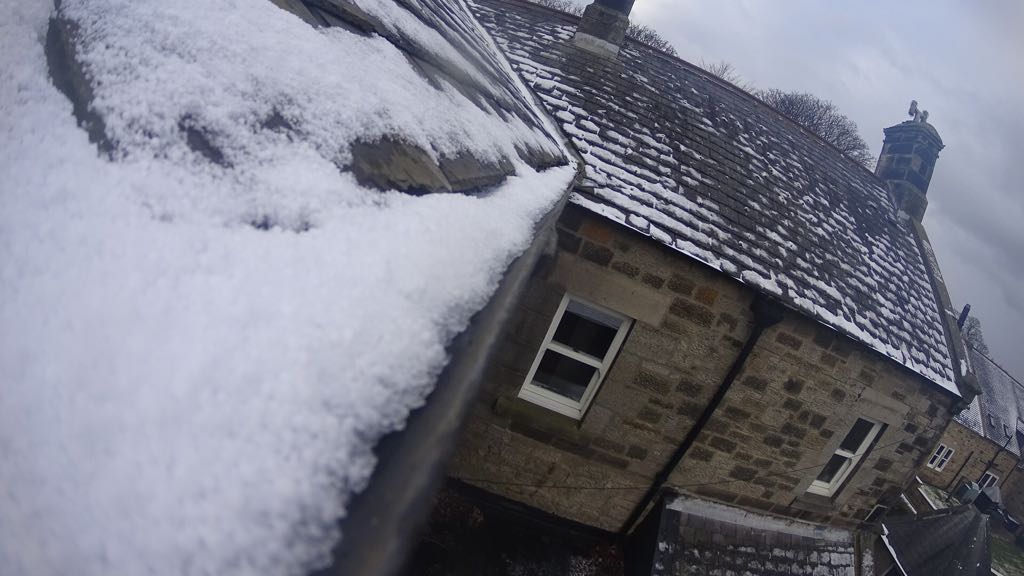
Freezing temperatures and heavy snow can cause significant issues for homes if the guttering is not properly maintained. When water or debris freezes within the system, it expands and puts immense pressure on the joints and brackets, which can lead to warping or the guttering pulling away from the house entirely. If you are concerned that you might have standing water in your gutters, now is the time to take action.
Common problems caused by ice
Ice dams are a major concern during the winter months, forming when snow on the roof melts and then refreezes at the colder eaves. This creates a solid barrier that prevents further meltwater from draining away, often forcing it back under the roof tiles and into the property.
The weight of the ice itself is another issue, as gutters are designed to carry flowing water rather than heavy, solid blocks. This extra load can cause sections to sag or snap, especially if they are already weakened by age or existing blockages.
Impacts on the property structure
If the water cannot flow through the downpipes because they are frozen solid, it will often spill over the sides. This can lead to several problems for the building:
-
Penetrating damp on the external walls as water saturates the brickwork.
-
Damage to the fascia boards where the gutters are attached, leading to wood rot.
-
Soil erosion and pooling at the base of the walls, which can eventually affect the foundations.
-
Dangerous icicles forming along the roofline which pose a risk to anyone walking below.
Materials and maintenance
Different materials react to the cold in various ways. Plastic or vinyl gutters are more likely to become brittle and crack in extreme temperatures, while seamless aluminium systems tend to be more resilient.
To prevent these issues, it is recommended to clear out leaves and moss so that water can move freely.